A flexible budget meal plan built around shared ingredients
Plan five dinners with overlapping groceries, a printable shopping worksheet and room for schedule changes, using your own store prices.
Serving illustration.
A useful budget meal plan starts with the groceries you can actually use. Instead of assigning a different shopping list to every evening, choose a few ingredients that appear in more than one dinner. Then check the quantities against the recipes and your household. This five-night framework leaves room for changing plans without promising a fixed grocery bill or a particular amount of savings.
Set the boundaries for your week
Write down how many people will eat each evening and which nights need the easiest preparation. A busy Tuesday may suit quesadillas, while an evening with more time could fit a rice dish. Include any planned meal away from home before choosing recipes. Five available dinners do not have to mean cooking on five consecutive calendar days.
Look through the refrigerator, freezer and pantry next. List ingredients with useful quantities, such as two cans of chickpeas or enough pasta for one recipe. A note that says only beans can hide a mismatch between dried beans and the canned version your recipe requires. Plan around the actual form you have.
Choose a five-night framework
Here is a vegetarian starting point for two people. Use the corresponding recipes in our collection for measured ingredients and preparation. These choices share groceries, but each dinner is prepared according to its own instructions.
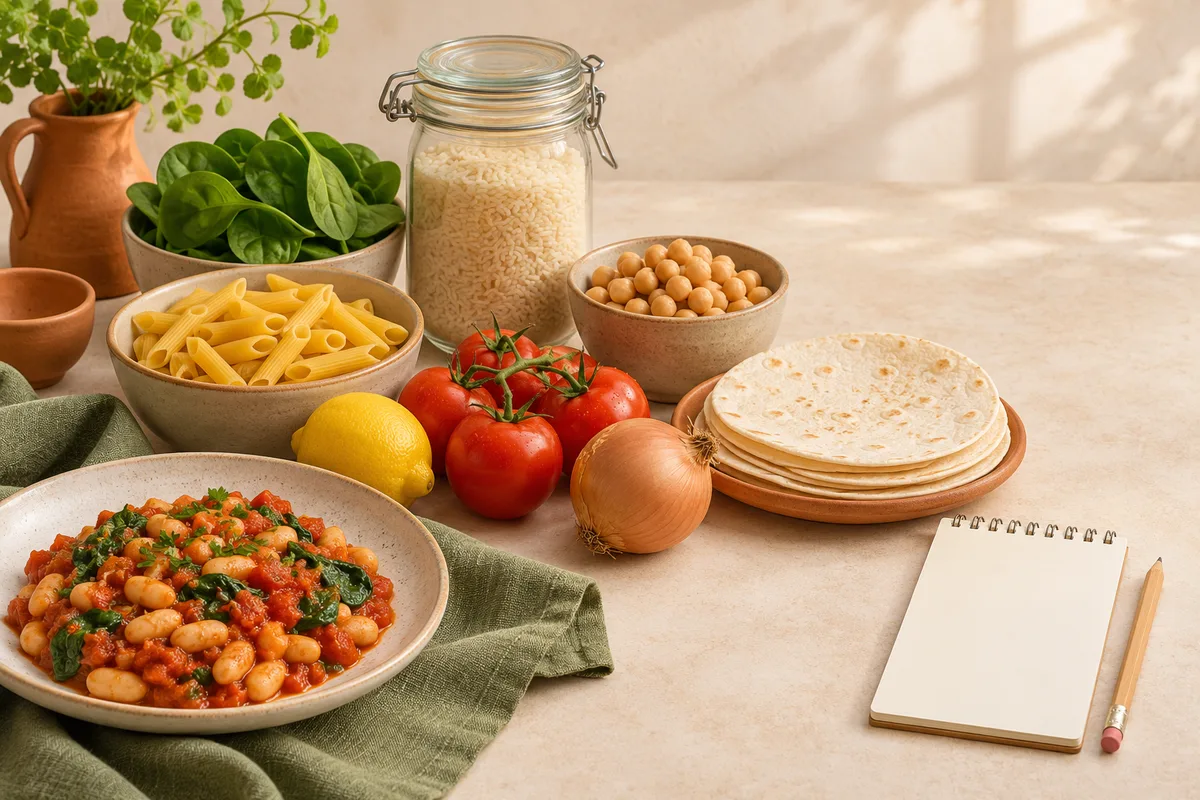
- Night one: lemon chickpea pasta. Check the pasta, chickpeas, lemon, garlic and greens your selected recipe calls for.
- Night two: black bean quesadillas. Plan tortillas, black beans, cheese and the specified vegetables; check the filling quantities before buying.
- Night three: chickpea rice bowls. Add the required rice and fresh vegetables, accounting for any chickpeas already assigned to the pasta.
- Night four: tomato white bean skillet. Use its own bean and tomato quantities, then decide whether you want bread alongside it.
- Night five: a fresh repeat of the dinner that best fits your remaining groceries. Add another full batch of its ingredients to the shopping calculation.
Count overlap without counting an ingredient twice
Create one total for each ingredient across all five dinners. If two recipes use chickpeas, add their required amounts before subtracting what is in the cupboard. Do the same for cheese, rice and fresh produce. The word shared describes a grocery appearing in several dishes; it does not mean that one recipe's measured portion also supplies another meal.
Check package sizes after calculating those totals. A large package is useful only if you have a realistic use for the remainder. Consider available storage space and the label's handling instructions. Compare the total checkout cost with your own spending limit rather than assuming the lowest unit price always suits this particular week.
Copy this printable shopping worksheet
Use the page's Print button, or copy the following lines onto paper. Next to every item, record three quantities: required for the plan, already available, and still to buy. Fill in amounts from the recipes rather than treating this outline as a complete measured list.
- Pantry: pasta, rice, chickpeas, black beans, white beans and tomatoes in the forms specified by the recipes.
- Produce: recipe quantities of lemon, lime, garlic, onion, pepper, cucumber, tomatoes and greens.
- Refrigerated items: cheese and any other ingredients your chosen versions require.
- Bread and tortillas: include the optional skillet accompaniment and the extra batch selected for night five.
- Seasonings: check your supply of oil, herbs and spices before adding replacements.
Leave one decision flexible
Keep the fifth dinner unassigned until you have checked your schedule and the remaining ingredient quantities. This is a fresh cooking slot, not an instruction to hold a cooked meal for the entire week. If you choose a different recipe, update the list before shopping instead of trying to force leftover ingredients into an unsuitable method.
Food-safety basics still apply to an economical plan. Follow the CDC guidance linked below for clean preparation, separation of raw foods, proper cooking and prompt refrigeration. Package directions and safe handling take priority over using an ingredient simply because it appears on the plan.
Check the plan before checkout
Review the plan once more before you shop. After the week, note which groceries were useful across dinners and which remained unused. Adjust the next plan using that record.
- Have I counted the right number of people for each night?
- Did I total every recipe, including the fresh repeat?
- Does each item match the required dry, canned, frozen or fresh form?
- Have I checked pantry supplies and package sizes?
- Does the basket fit my actual spending limit and storage space?
Sources & editorial notes
Follow ingredient labels and the cooking guidance below. Food-safety references are listed for further reading.
Read our editorial policy