Easy dinner ideas for two, with less leftover guesswork
Plan a flexible dinner for two with shared ingredients, sensible recipe scaling and a short shopping checklist.
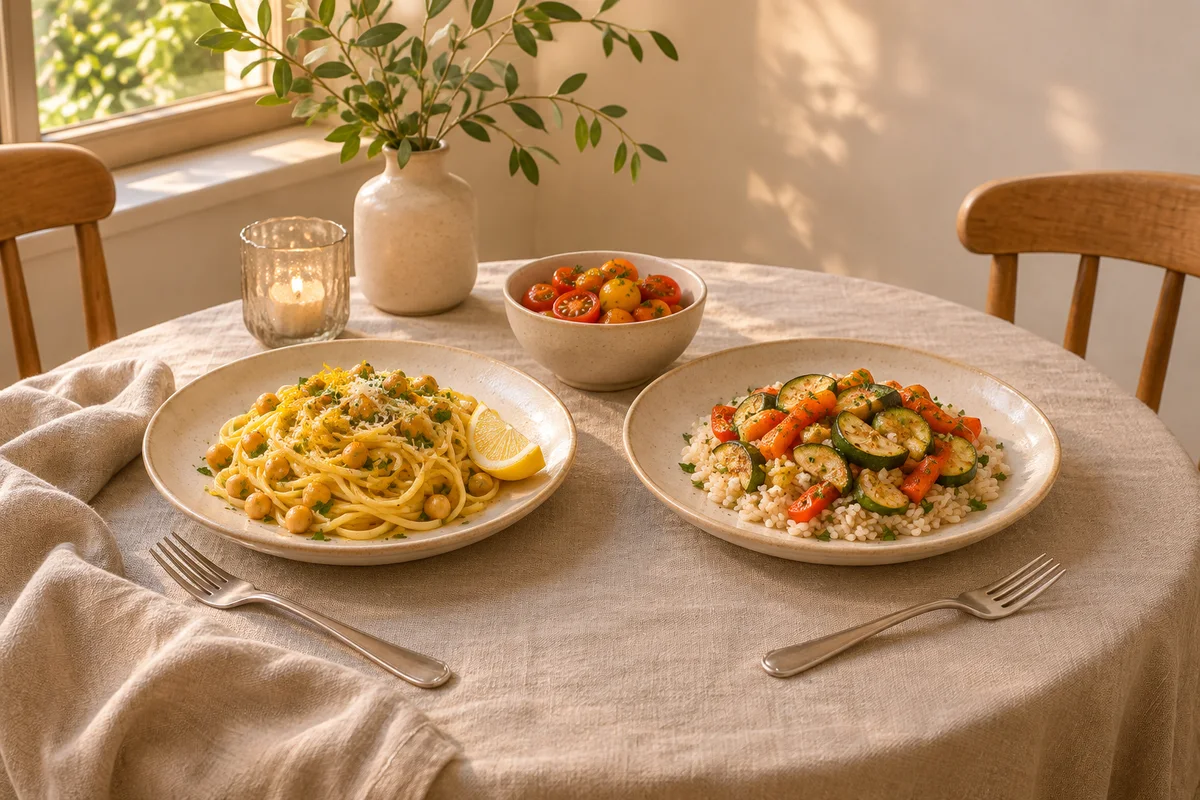
Serving illustration.
Cooking for two can be simple without turning every meal into a project. The useful starting point is a dinner structure you can repeat: one main cooking task, a few ingredients that work together, and a clear decision about portions. This guide helps you choose what to cook and what to buy. It is an editorial planning guide, not a tested menu, a nutrition plan or a promise that every household will spend the same amount.
Choose one main cooking task
Before choosing a dish, decide what you have time and energy to do. A stovetop pasta, a pan of beans or a rice bowl each gives you one central task to organize around. Adding three separate sides may make a small dinner feel like a much larger job. Start with a main dish you both enjoy, then decide whether it needs a simple accompaniment.
For a busy evening, choose a recipe whose equipment and instructions are familiar. Reading a recipe in advance is part of the preparation: check whether it assumes cooked rice, softened vegetables or an ingredient you still need to buy. A short ingredient list does not always mean a short cooking time.
Use a small rotation of dinner structures
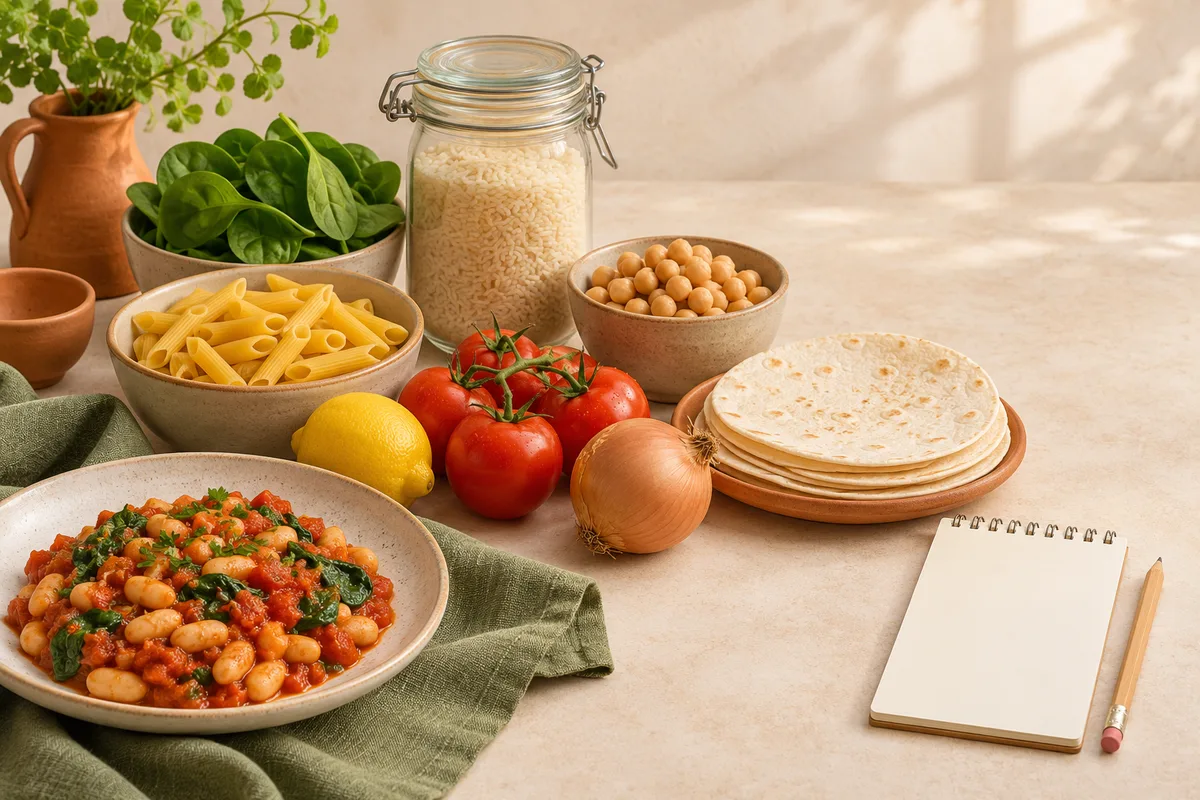
You do not need a different cooking method for every night. Change the ingredients while keeping a familiar structure. The combinations below are ideas rather than complete recipes; use the linked recipe collection for ingredient quantities and instructions.
- A pantry pasta with beans, vegetables and a simple sauce.
- A bowl built around rice, chickpeas, vegetables and a dressing.
- Folded tortillas with beans, vegetables and cheese.
- A warm tomato-and-bean skillet with bread or rice on the side.
Scale the quantities, then check the pan
When you halve a four-serving recipe, write out the adjusted quantities before starting. Some ingredients are easier to divide by weight or volume than by counting packages. A half can of beans can be measured after draining; the remaining amount needs an intentional use and appropriate storage rather than being forgotten in the refrigerator.
Cooking time does not scale in the same way as ingredients. A smaller quantity may heat faster, while a deeper pan or a crowded cooking surface may change the result. Follow the recipe's method and doneness guidance instead of simply cutting its cooking time in half. The serving selector on our recipes changes ingredient amounts only.
Buy for a second use, not an imaginary saving
Look for two dinners that share an ingredient you already enjoy. Spinach might work in both pasta and a bean skillet. A lemon can finish a sauce and contribute to a dressing. This overlap can make the shopping list simpler, but it is only useful when you will actually cook the second meal.
Compare package sizes with your plan. A larger bag is not automatically a better choice if the extra food will not be used. We do not attach a fixed cost to these dinner ideas because prices, brands and appetites vary. Your own receipts and portions provide a better basis for estimating what a meal costs in your kitchen.
Write a five-minute shopping checklist
Open the recipes you have chosen and combine the repeated ingredients into one list. Check your pantry before shopping, and keep optional extras separate from ingredients that the method depends on. A missing garnish should not stop you from making an otherwise workable dinner.
- One base: pasta, rice, tortillas or another familiar choice.
- A filling ingredient suitable for your preferences.
- Vegetables used across the dinners you selected.
- The exact oil, seasoning and sauce ingredients in the recipes.
- A written plan for any partially used package.
Keep tomorrow flexible
Planning a second use for an ingredient is different from keeping every cooked meal for the rest of the week. Follow current food-safety guidance for handling, refrigeration and reheating. If you are uncertain about a food or a storage method, use an authoritative source rather than guessing from how it looks.
After the meal, note whether the recipe quantity suited the two of you and whether anything needed more time than expected. Use that note the next time you cook. A useful dinner routine grows from a few repeatable choices, not from finding a new perfect recipe every evening.
Sources & editorial notes
Follow ingredient labels and the cooking guidance below. Food-safety references are listed for further reading.
Read our editorial policy