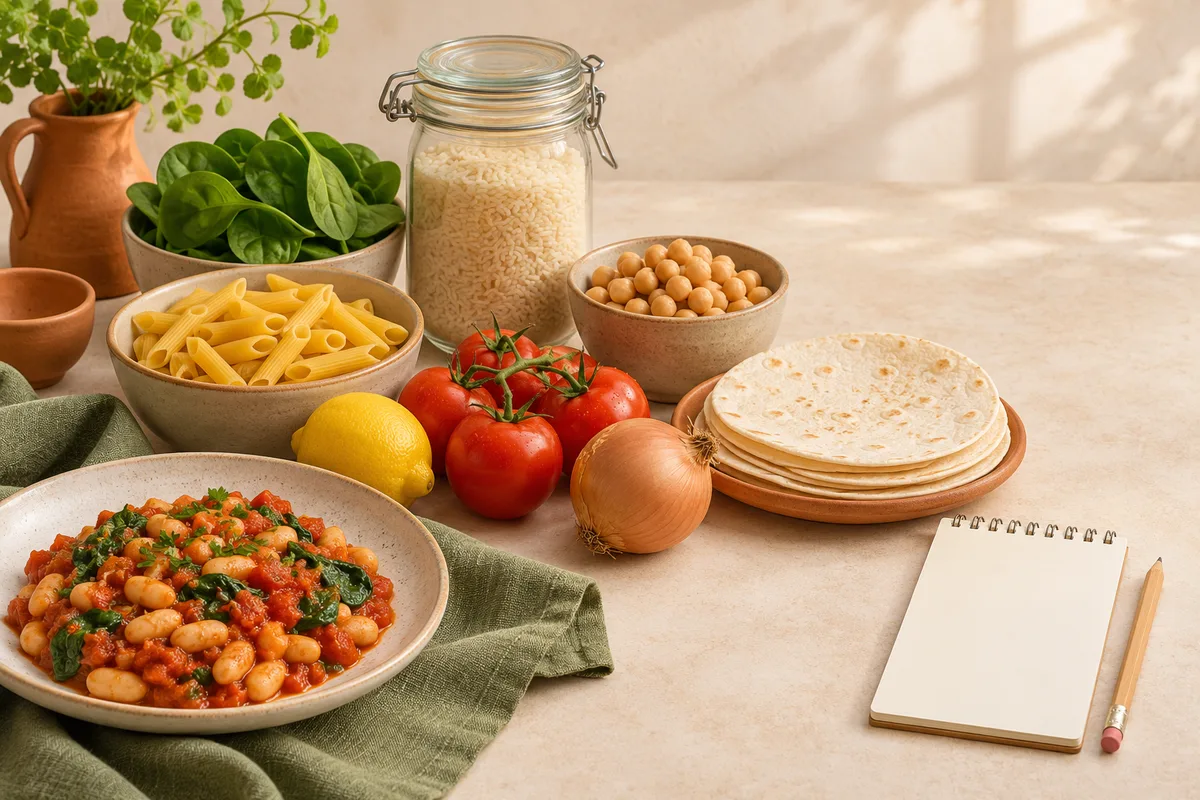
Pantry dinner ideas: choose a meal from what you have
Turn pasta, canned beans and frozen vegetables into a practical dinner plan with five flexible combinations and a short decision checklist.
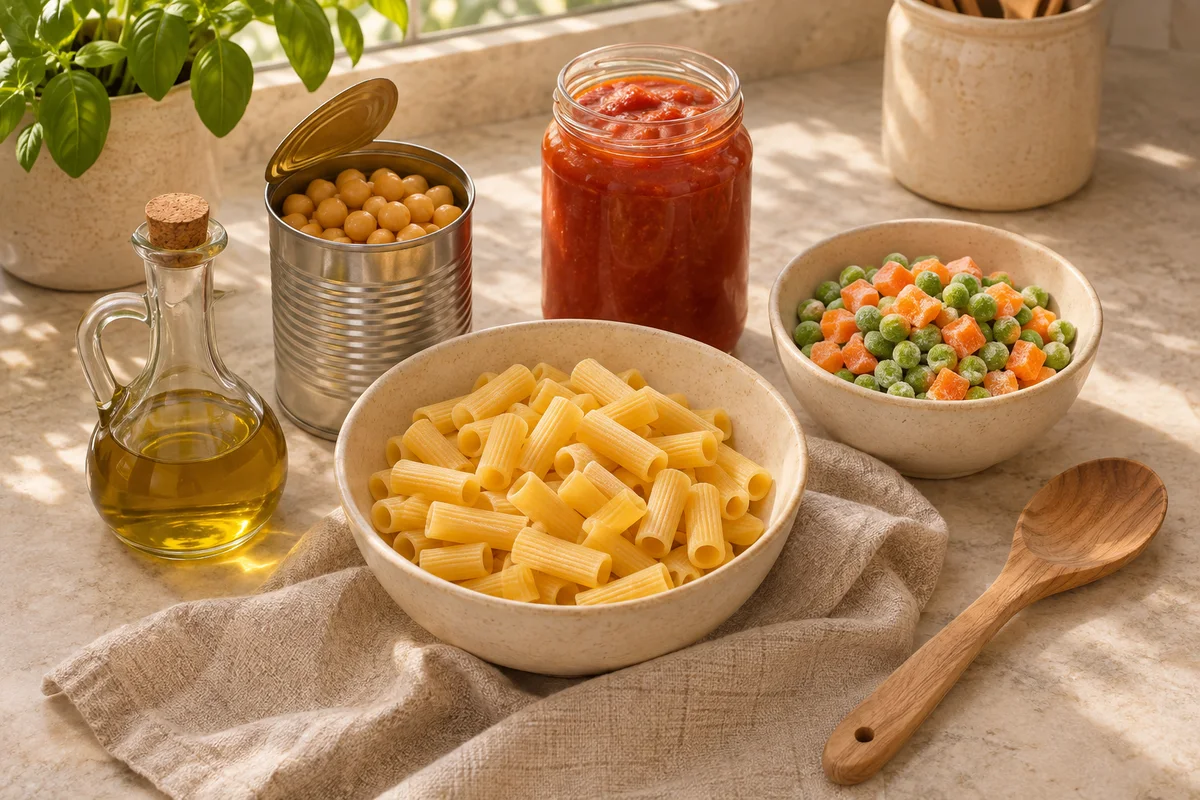
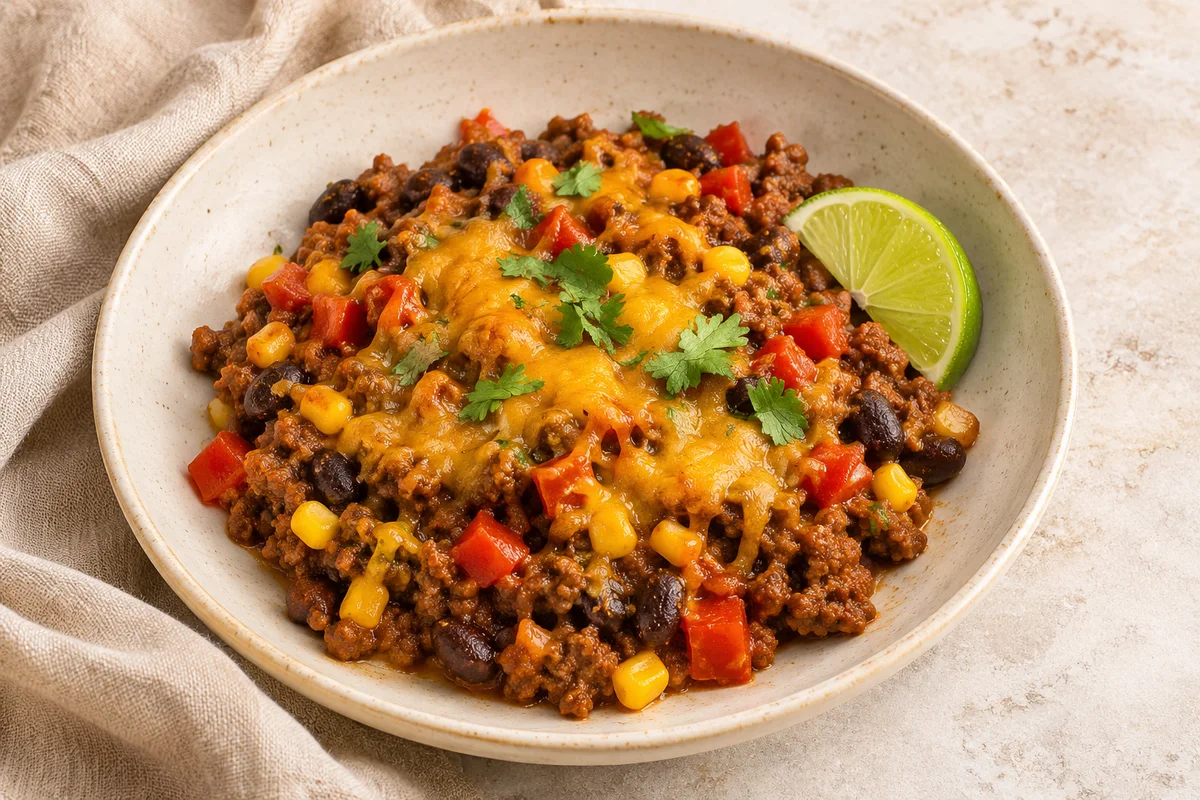
Serving illustration.
The most useful pantry dinner starts with a small decision, not a new shopping list. Look at the ingredients you already have, choose one familiar cooking method, and build a meal around it. This guide focuses on choosing tonight's dinner; our separate pantry guide explains how to stock your shelves. The combinations below are flexible ideas, flexible meal suggestions rather than fixed-price meals or complete nutritional plans.
Take a three-part inventory
Before opening several packages, write down a few options in three groups: a base, something to make the meal more substantial, and a sauce or seasoning. Pasta or rice could be your base. Canned beans or chickpeas could be the next ingredient. Canned tomatoes, a familiar spice blend or a dressing you already enjoy can give the combination a direction.
Include the freezer in this inventory. Frozen vegetables can help you assemble a meal when your fresh produce drawer is empty, but read the package before deciding how to use them. A frozen vegetable mix is not automatically ready to eat. Choose the preparation method on its label or in the recipe you are following.
Pick the combination that needs the fewest extra decisions
Choose one of these directions based on what is available. These are starting points for finding a suitable recipe, not instructions to put every ingredient into a pan at once. Ingredients may need different preparation, and the package directions still matter.
- Pasta, chickpeas and a vegetable: use a familiar pasta recipe, then check which sauce ingredients you have before starting.
- White beans and canned tomatoes: look for a bean skillet recipe and serve it with the bread or rice you planned for the meal.
- Rice, beans and frozen vegetables: prepare each component according to its instructions, then choose a seasoning you already use.
- Tortillas, black beans and cheese: if tortillas and cheese are available, use a quesadilla recipe with measured filling quantities.
- Couscous, chickpeas and vegetables: choose a recipe suited to your particular couscous; instant and pearl varieties need different methods.
Match the idea to an actual recipe
Once you have a direction, read the complete recipe rather than borrowing only its title. Check whether it assumes cooked rice, canned beans or vegetables that are already prepared. Dried beans cannot simply replace canned beans within the same quick cooking method. When the ingredient form differs, choose another recipe or follow the appropriate preparation first.
Our lemon chickpea pasta and tomato white bean skillet are two recipes you can consult for measured ingredient lists. The black bean quesadillas offer another option when you have tortillas. Their timings are estimates. Read their notes before deciding whether they fit your evening.
Change one ingredient thoughtfully
Think about what a missing ingredient contributes. A sauce may depend on tomatoes for its liquid, while a final squeeze of lemon changes its flavor. Replacing either ingredient without considering that role can lead to a different result. When you cannot make a reasonable substitution, choose a simpler meal structure instead of buying several specialty ingredients to rescue the first idea.
Keep seasonings modest at first. The saltiness of canned ingredients and prepared sauces varies, so taste at an appropriate point in the recipe before adding more. Check labels for allergies and dietary requirements rather than assuming two similar-looking products contain the same ingredients.
Use a short before-you-cook checklist
A minute spent checking the plan can prevent several interruptions once the stove is on. Put the selected ingredients beside the recipe, check the equipment it requires, and decide how many portions you actually want. Buying or cooking a larger amount is not automatically useful if you have no plan for the remainder.
- Have I checked the cupboard, freezer and refrigerator before choosing?
- Do my ingredient forms match the recipe: dry, canned, frozen or already cooked?
- Are the sauce ingredients available, not just the main ingredients?
- Does the method fit the time, cookware and space I have?
- Have I checked labels and considered what to do with partially used packages?
Finish with a repeatable dinner note
Write down the combination you chose and any ingredient you would change next time. This is a personal planning note, not a claim that the meal has been professionally tested. A short list of combinations that suit your household can make the next pantry night easier than searching from the beginning.
Pantry-based food still requires normal food-safety care. Keep hands and preparation surfaces clean, follow cooking directions, and refrigerate perishable food promptly. The CDC resource below explains the clean, separate, cook and chill approach. A cupboard ingredient is not a reason to ignore the handling instructions for the finished meal.
Sources & editorial notes
Follow ingredient labels and the cooking guidance below. Food-safety references are listed for further reading.
Read our editorial policy