One pan dinner ideas: choose the meal and plan the cooking order
Choose between a skillet dinner and a sheet-pan meal, match ingredients by cooking needs, and use a practical checklist before turning on the heat.
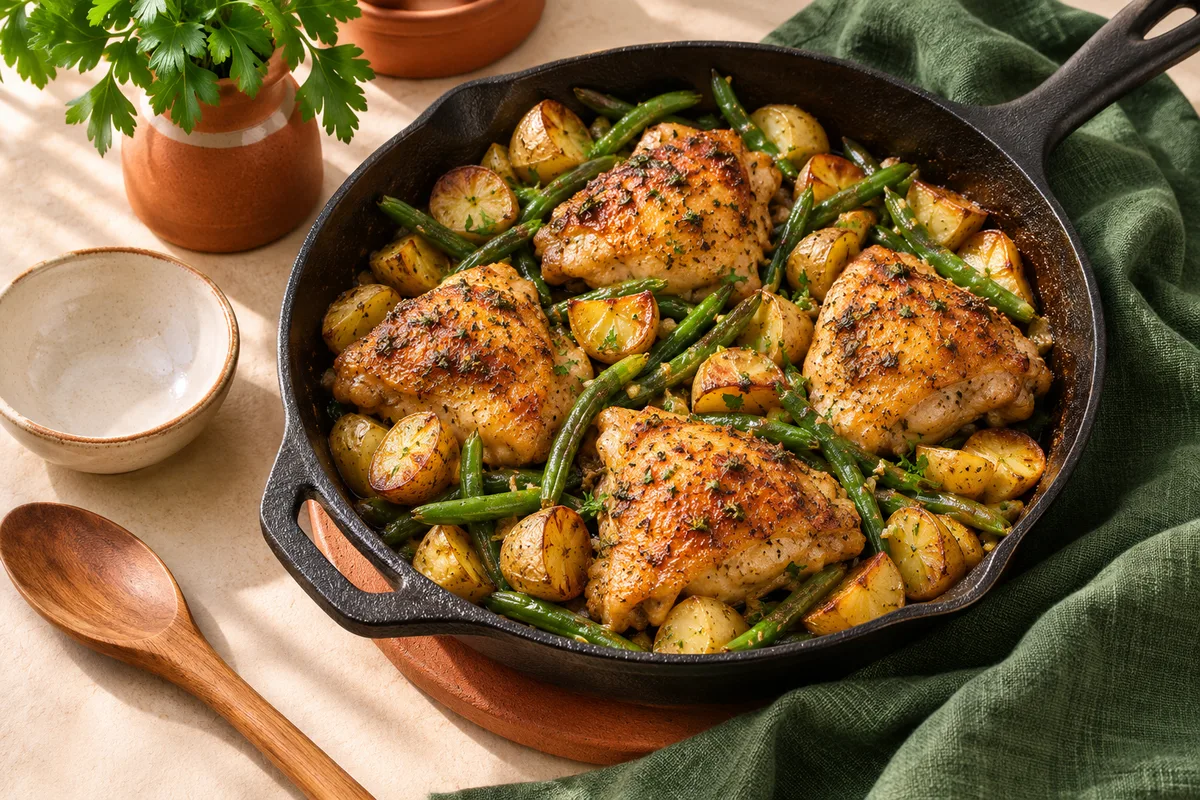
Serving illustration.
A one-pan dinner works best when the ingredients share a sensible cooking plan. Using one vessel does not mean everything belongs in it at the same moment. Start with the meal you want, check the recipe from beginning to end, and decide which ingredients need a head start. These one pan dinner ideas are planning examples; follow the selected recipe for quantities and cooking guidance.
Choose the pan before choosing the ingredients
A skillet suits dinners where you want to stir, build a sauce or add ingredients in stages. A rimmed sheet pan suits an oven recipe that spreads food across a wider surface. Choose the method that fits your equipment and the recipe you intend to follow. Check that handles, coatings and lids are suitable for the temperatures involved.
Be precise about what counts as one pan in your household. A skillet filling served with separately cooked rice still needs another cooking vessel. Bread, tortillas or a ready-to-eat accompaniment may fit your cleanup goal more closely. Decide this before choosing a recipe rather than discovering an extra pot halfway through dinner.
Try one of four practical dinner directions
Use these combinations to narrow your search. Then follow a complete recipe with measured ingredients and an explicit cooking sequence. The examples do not supply interchangeable quantities or a universal oven setting.
- Tomato and white bean skillet: a useful direction when you have canned beans and want a saucy meal to serve with bread. Check whether the recipe drains the beans and how much tomato liquid it uses.
- Chicken fajita sheet pan: look for a recipe that specifies the chicken cut, pepper thickness and arrangement. A different cut of chicken can require a different method.
- Mushroom and spinach skillet pasta: choose a recipe designed to cook pasta in its sauce. Ordinary boiled-pasta instructions cannot simply be transferred to a shallow skillet with an arbitrary amount of liquid.
- Sausage and vegetable sheet pan: check whether the recipe calls for raw or fully cooked sausage. Those products are different starting points, even when their packages look similar.
Write a short cooking-order note
Before starting, divide the ingredients into three groups on paper: those added first, those added later, and finishing ingredients. Copy the order from your selected recipe. Dense vegetables, delicate greens and a final herb garnish do not necessarily need the same treatment. This note makes the sequence easier to follow without repeatedly searching through a long ingredient list.
Cut size matters to that plan. If a recipe specifies small pieces, larger chunks may not finish alongside the other ingredients. Aim for the stated dimensions and consistent pieces within each ingredient. Do not assume that cutting everything to the same size makes unlike ingredients cook at the same rate.
Leave room for the method to work
Check the specified pan size and portion count together. Adding more servings to the same pan changes how tightly the food is packed. If the recipe asks you to cook in batches, keep that step. For a larger household, an additional tray may be more practical than forcing the entire dinner onto one crowded surface.
With a saucy skillet meal, pay attention to the liquid instructions. Covered and uncovered stages serve different purposes, and a different pasta shape may change the result. If you lack the requested lid or pan, choose another recipe with suitable equipment instead of improvising several changes at once.
Use this before-the-heat checklist
Set out ingredients and read the last step as well as the first. This helps you catch an accompaniment, resting period or finishing ingredient before cooking begins.
- Does my pan match the size and cooking method in the recipe?
- Are the ingredients in the specified form: raw, cooked, canned or frozen?
- Have I noted which ingredients enter first and which enter later?
- Do I have the required lid, utensils and a food thermometer when appropriate?
- Will increasing the portions require batches or another tray?
- Have I planned the accompaniment and how to handle any leftovers?
Keep convenience separate from doneness
A single pan does not remove the need for normal food-safety checks. Follow the CDC resource below for clean, separate, cook and chill guidance. Use a food thermometer and the relevant safe-temperature guidance rather than treating browned edges or a timer as proof that meat is safely cooked.
After dinner, record the recipe, pan size and portion count you used. A brief household note can make your next choice easier. Keep adjustments specific so you can distinguish a recipe change from an equipment change when deciding what to repeat.
Sources & editorial notes
Follow ingredient labels and the cooking guidance below. Food-safety references are listed for further reading.
Read our editorial policy